Beginning Your European Cultural Journey
For centuries, the Grand Tour was a rite of passage for young aristocrats, a journey through classical antiquity and the Renaissance that shaped Western culture. Today, that transformative experience is accessible to all. Your first trip to Europe is more than a vacation; it is a modern-day Grand Tour, a chance to walk through the pages of history and see the art that defined civilizations.
The sheer number of choices can feel overwhelming when planning a trip to Europe. This guide is not a checklist of places to photograph. Instead, it offers a curated path through different eras, architectural styles, and pivotal moments. These ten landmarks are chosen because they tell a story, not just about the city they inhabit, but about the continent as a whole. They are the anchors of a narrative that stretches from the might of ancient empires to the dawn of modernism and the enduring quest for unity.
The key to a meaningful journey is your mindset. It is impossible to see everything, and trying to do so only leads to exhaustion. Embrace curiosity. Allow yourself to be moved not just by the scale of a monument, but by the small details: the way light hits a cathedral window, the worn steps of a castle, or the echo of footsteps in a Roman ruin. This approach transforms sightseeing into a personal experience.
Think of this guide as a framework. It provides the context to understand why these places matter, helping you connect with them on a deeper level. Your journey will be unique, shaped by your own observations and reflections. Prepare to be amazed, challenged, and inspired. This is your story to write.
1. The Colosseum: Echoes of Imperial Rome
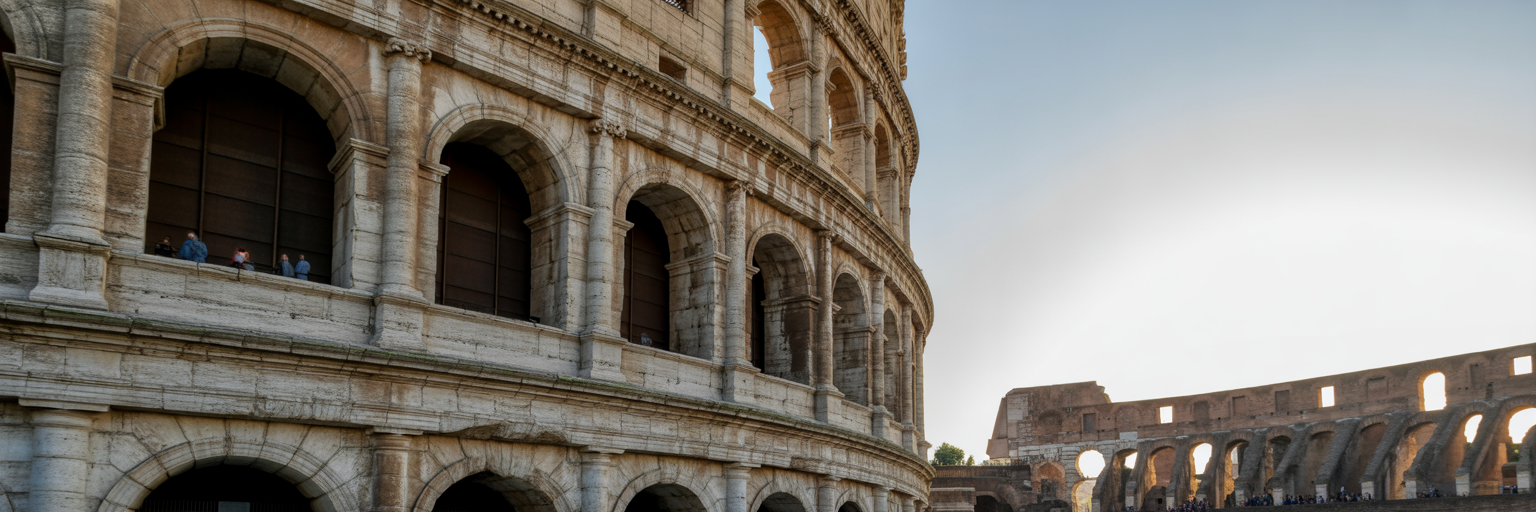
The Colosseum stands as a powerful symbol of Imperial Rome, but its legacy is a complex one. It is both an undisputed architectural marvel and a stage for unimaginable brutality. For the Romans, the gladiatorial games held within these walls were more than entertainment; they were a tool for public control and a visceral reflection of a society that valued martial prowess and power above all else. As you stand inside, it is easy to be awed by its scale, but the real experience comes from imagining the roar of 80,000 spectators and the life-or-death struggles on the arena floor.
For anyone wondering what to see in Rome for first time visitors, navigating the Colosseum requires a strategy to avoid the notorious queues and crowds. Here are a few essential tips:
- Book Tickets Online: This is not a suggestion; it is a necessity. Booking your ticket for a specific time slot allows you to bypass the hours-long lines that snake around the amphitheatre, especially in high season.
- Choose the Right Time: The shoulder seasons of April to May and September to October offer the best combination of pleasant weather and more manageable crowds. If you must visit in summer, go as early as possible to avoid the intense midday heat.
- Invest in a Guided Tour: A knowledgeable guide is the difference between looking at a pile of ancient stones and understanding the world that built them. They bring the ruins to life with stories of emperors, gladiators, and daily life, providing context that is impossible to grasp on your own.
- The Crown Jewels: Prepare for a dazzling, almost overwhelming display of monarchy’s power and wealth. The collection includes crowns, orbs, and sceptres used in coronations, featuring some of the world’s most famous diamonds.
- The White Tower: This is the original Norman keep, the oldest part of the fortress. It now houses an impressive collection from the Royal Armouries, showcasing centuries of arms and armour.
- The Bloody Tower and Traitors’ Gate: These are the sites associated with the Tower’s darkest tales. You can stand in the place where the two young princes were allegedly murdered and see the infamous water gate through which prisoners like Anne Boleyn entered, never to leave.
- Start with the Greek Antiquities: Begin your journey by seeing two of the most famous sculptures in history, the majestic Winged Victory of Samothrace and the elegant Venus de Milo.
- Proceed to the Italian Paintings: Join the crowd to see the Mona Lisa, but do not miss the colossal and breathtaking painting opposite it, Veronese’s The Wedding at Cana. It is often overlooked but is just as impressive.
- Conclude with French Large-Formats: End your trail with the powerful and iconic painting by Delacroix, Liberty Leading the People, a symbol of French revolutionary spirit.
- St. Vitus Cathedral: The spiritual centerpiece of the complex, this stunning Gothic cathedral will leave you in awe. Its most famous feature is the beautiful Art Nouveau stained glass created by Czech artist Alfons Mucha.
- Old Royal Palace: Step into the historic Vladislav Hall, a massive vaulted chamber where medieval kings were crowned and knights once jousted.
- St. George’s Basilica: The oldest surviving church within the castle walls, this beautiful red-fronted building is a perfect example of Romanesque architecture, offering a peaceful contrast to the grandeur of St. Vitus.
- Golden Lane: A charming, cobbled street of tiny, colourful houses. Originally built for castle guards, it was later home to artisans and, according to legend, alchemists trying to turn metal into gold.
ol>
The Colosseum represents both the peak of Roman engineering and the depth of its cruelty. To complete the picture, use the combined ticket that includes the Roman Forum and Palatine Hill. Walking through the ruins of the Forum, the centre of Roman public life, and exploring the palaces on Palatine Hill provides the crucial context of politics, commerce, and power that completes the story the Colosseum begins.
2. The Acropolis: Athens’ Crowning Jewel
Perched high above the sprawling city of Athens, the Acropolis is more than a collection of ancient ruins. It is the symbolic birthplace of Western civilization’s most foundational ideas: democracy, philosophy, and art. At its heart is the Parthenon, a temple dedicated to the goddess Athena, which stands as an enduring monument to mathematical and aesthetic perfection. Its design principles, from the subtle curvature of its columns to its precise proportions, are still studied today as the pinnacle of classical architecture.
Visiting this sacred hill requires some practical preparation. The ancient marble paths have been worn smooth over millennia and can be incredibly slick, so sturdy, non-slip shoes are essential. To avoid both the punishing Greek sun and the crush of tour groups that arrive mid-morning, plan to be there right when it opens at 8 AM. The morning light casts a beautiful glow on the marble, and the relative quiet allows for a more contemplative experience.
The unique power of the Acropolis lies in its symbolic weight. For modern Greeks, it is a profound emblem of national identity and resilience, a structure that has survived centuries of foreign occupation, warfare, and transformation. It has been a temple, a church, a mosque, and an ammunition depot, yet it endures as a testament to the ideals born on this hill.
A visit is incomplete without exploring the Acropolis Museum at the foot of the hill. This is not just a storage space for artefacts. The museum’s brilliant modern design and thoughtful curation serve as a narrative tool, reassembling the Parthenon’s story. Here, you can see the original intricate sculptures up close, understanding what has been preserved and what has been lost, and fully appreciating the artistic genius that the ruins above can only hint at.
3. The Eiffel Tower: Paris’s Iron Icon
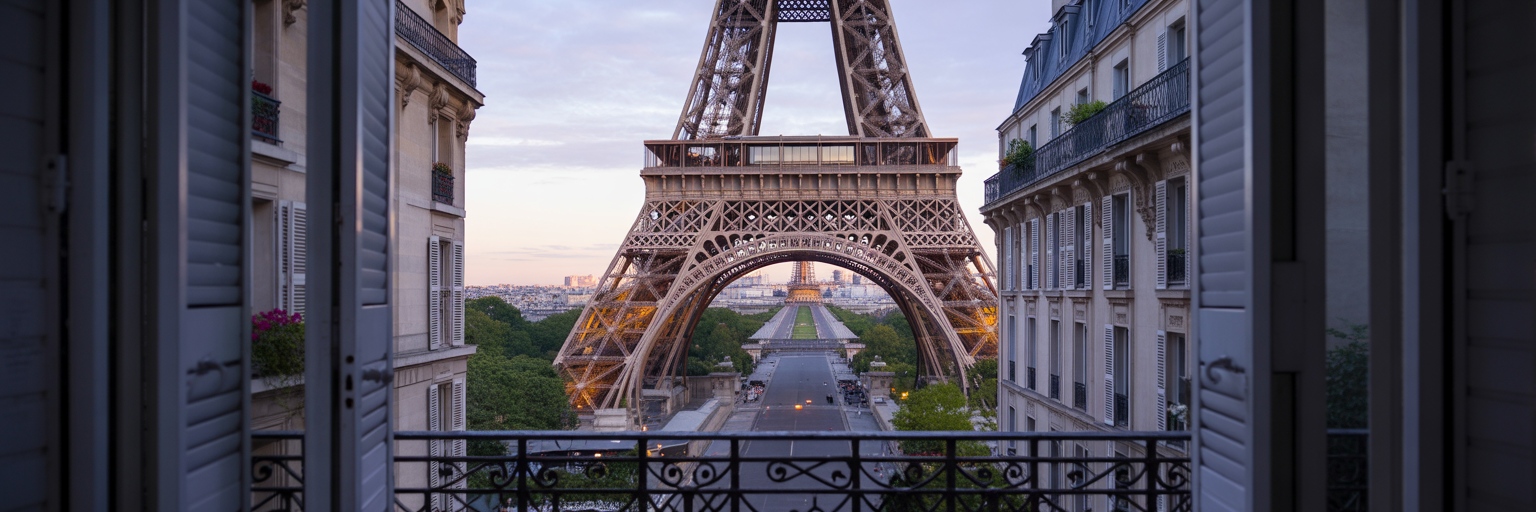
Today, it is impossible to imagine Paris without the Eiffel Tower, but its story begins with controversy. Built for the 1889 World’s Fair, Gustave Eiffel’s iron lattice structure was initially condemned by the city’s artistic and literary elite as a useless and monstrous “black smokestack.” This journey from a temporary, controversial structure to a beloved global symbol of romance and innovation is central to its identity. It is one of the most essential Paris historical attractions because it represents the city’s ability to embrace the future.
For your first visit, you have a choice that shapes your experience. Taking the stairs to the second floor is a more physical, intimate encounter with the tower’s engineering. You can feel the structure around you and appreciate its immense scale from the inside out. The elevator, on the other hand, whisks you to the top for the ultimate panoramic view of Paris. Whichever you choose, booking timed-entry tickets weeks, or even months, in advance is crucial, especially if you hope to secure a coveted sunset slot.
The tower’s identity extends beyond tourism. It has served as a critical radio tower for military communications and a laboratory for scientific experiments in meteorology and aerodynamics. This functional history grounds it as more than just a pretty landmark. It is a working piece of Parisian infrastructure.
If the queues and heights feel daunting, there are more relaxed ways to appreciate its beauty. A classic Parisian experience is to have a picnic on the Champ de Mars, the large park at its base. As evening falls, head to the Trocadéro gardens across the river. From there, you have a perfect vantage point to watch the spectacular light show, when the tower sparkles for five minutes every hour on the hour, a truly magical sight.
4. Sagrada Família: Gaudí’s Unfinished Masterpiece in Barcelona
The Sagrada Família is not a static monument; it is a living, breathing work of art that has been under construction for over 140 years. To understand it, you must first understand its architect, Antoni Gaudí. His vision was rooted in the forms of nature, creating a basilica unlike any other in the world. He believed that nature was the work of God, and his design avoids straight lines in favour of organic, flowing shapes that mimic the natural world.
While the exterior is breathtaking, the most transformative experience is found inside. The interior columns branch out near the ceiling like trees in a forest, creating a canopy that supports the structure. The true magic, however, comes from the stained-glass windows. Gaudí designed them to create a moving, spiritual atmosphere that changes with the sun. In the morning, the light filtering through is a symphony of cool blues and greens. As the day progresses, it shifts to fiery oranges and reds in the late afternoon. Many first-time visitors miss this detail, but it is the key to feeling the soul of the building.
Booking tickets online is absolutely mandatory. They are almost never available for same-day purchase, and you must select a specific entry time. To deepen your visit, take time to understand the narrative of the exterior façades. The Nativity Façade, which Gaudí completed himself, is joyful and intricate, celebrating the birth of Christ. In stark contrast, the Passion Façade is stark, angular, and somber, depicting his suffering and death. Following this story gives your visit a clear structure. As the basilica’s own website provides, there is extensive detail on how every element, from the forest-like columns to the turtle and tortoise at the base of the portals, connects to Gaudí’s natural and spiritual vision.
5. The Tower of London: A Fortress of British History
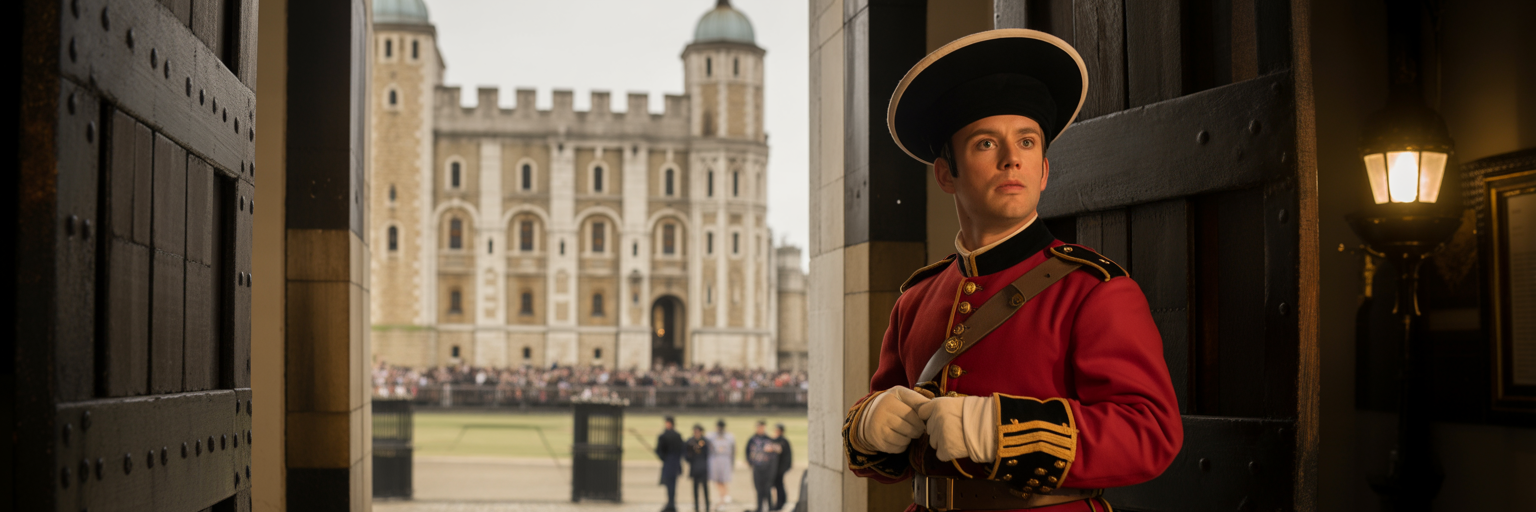
First-time visitors are often surprised to learn that the Tower of London is not a single tower but a sprawling fortress complex. For nearly a thousand years, it has been the stage for some of the most dramatic events in British history. Its thick stone walls have served as a royal palace, a formidable state prison, a place of infamous executions, an armoury, and the secure home of the priceless Crown Jewels. This shifting identity is what makes it such a fascinating place to explore.
The single most important piece of advice for any visitor is this: take a Yeoman Warder tour. These tours, led by the iconic “Beefeaters,” are not optional extras; they are an essential part of the experience. The Warders are not just guides; they are master storytellers who live within the Tower’s walls. With a unique blend of gravitas and humor, they bring the fortress’s bloody and brilliant history to life in a way no guidebook ever could.
Within the complex, several key sites demand your attention:
The experience is a powerful balance between the sheer spectacle of the jewels and the somber reality of its past as a place of imprisonment and death. It is a microcosm of British history itself, full of pomp, power, and tragedy.
6. The Canals of Venice: A Floating City’s Soul
In Venice, the canals are not just a feature; they are the city. They are its streets, its circulatory system, and its soul. The entire city was miraculously built on wooden piles driven into the marshy lagoon, a feat of engineering that dictated its history as a dominant maritime power and shaped its unique, enchanting architecture. There are no cars, no roads, only waterways and footpaths. Understanding how to navigate these “streets” is key to your visit.
For a first-time visitor, choosing between a gondola and the public vaporetto (water bus) can be confusing. Each offers a completely different experience.
| Feature | Gondola Ride | Vaporetto (Water Bus) |
|---|---|---|
| Cost | High (approx. €80-100 for 30 min) | Low (single ticket or day pass) |
| Experience | Romantic, traditional, quiet | Practical, bustling, local |
| Route | Narrow, quiet back canals | Main routes, primarily the Grand Canal |
| Pace | Slow, leisurely, personal | Efficient, follows a set schedule |
| Best For | A special occasion, romantic moments, seeing hidden corners | Getting from A to B, seeing the Grand Canal’s palaces, budget travel |
While the Grand Canal is magnificent, the strongest advice for any visitor is to embrace getting lost. The true magic of Venice is found when you wander away from the crowds of St. Mark’s Square and into the labyrinth of smaller canals, quiet courtyards (campi), and tiny bridges. This principle of seeking authenticity applies whether you’re in Venice or exploring a smaller town, where the real character is always found off the beaten path, as detailed in guides like the ones we’ve shared about local experiences. Finally, be a mindful traveler. Venice is a fragile city facing challenges from over-tourism and rising sea levels (‘acqua alta’). Your visit is a chance to support this beautiful, unique place responsibly.
7. The Louvre Museum: A Palace of World Art in Paris
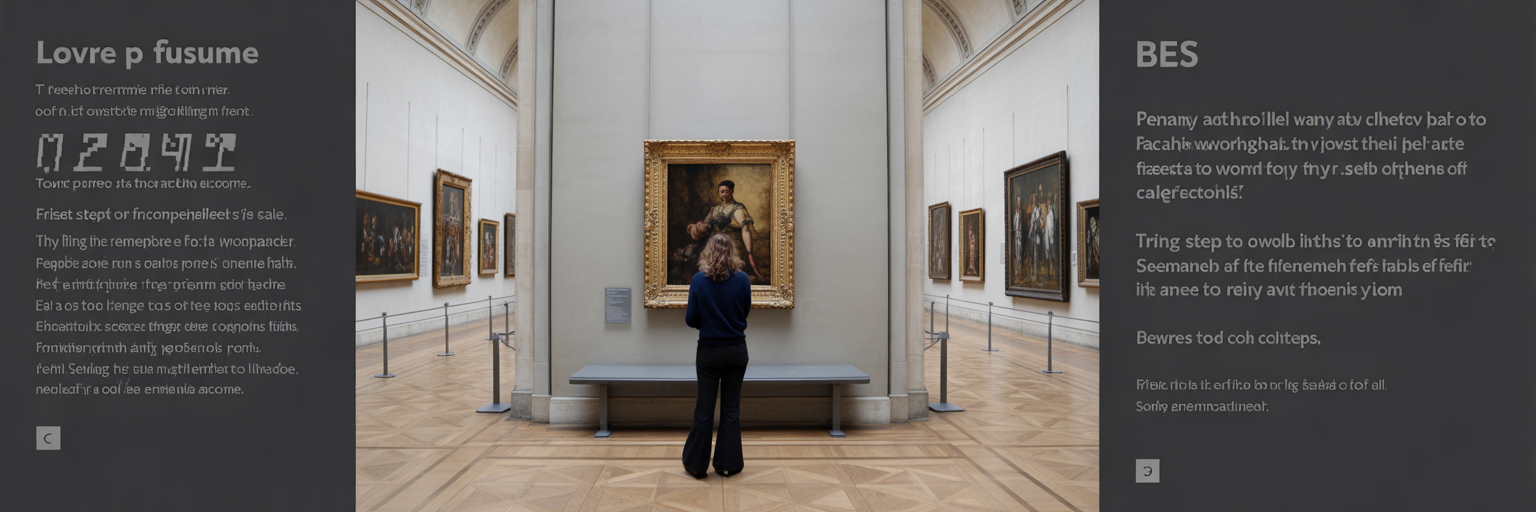
The primary challenge of visiting the Louvre is its almost incomprehensible scale. It helps to remember that it was first a royal palace, a work of art in its own right, before it became home to one of the world’s greatest art collections. The first step to a successful visit is to abandon any notion of seeing it all. Trying to do so will only lead to “Louvre fatigue,” a state of mental and physical exhaustion that prevents you from appreciating anything.
The best strategy is to divide and conquer. Before you go, look at a map of the museum and pick one or two wings that genuinely match your interests. Are you fascinated by ancient civilizations? Head to the Egyptian Antiquities. Do you love the masters of the Renaissance? Focus on the Italian Paintings. For the absolute first-timer who wants to see the icons without getting lost for hours, this curated “Masterpiece Trail” is a manageable approach:
Beyond the art, take a moment to appreciate the building itself. A walk through the opulent Napoleon III apartments offers a glimpse into the palace’s royal past, while standing in the main courtyard allows you to admire the striking contrast between the historic architecture and I.M. Pei’s modern glass pyramid. This approach makes the museum rewarding rather than overwhelming. For those looking for more in-depth travel plans, our city guides offer curated itineraries for destinations around the world.
8. Prague Castle: A Fairytale Chronicle of a Nation
Prague Castle is not a single, standalone castle in the traditional sense. It is a vast, sprawling complex—a “city within a city”—that has served as the historical and political heart of the Czech nation for over a thousand years. Its collection of palaces, churches, and gardens overlooks the Vltava River, creating one of Europe’s most iconic skylines. The goal for a first-time visitor is to make this immense site feel accessible and magical, not exhausting.
The best approach is to purchase the “Circuit B” ticket, which offers the best value by covering the four most essential sites without being overwhelming. This circuit gives you a perfect cross-section of the castle’s history:
Here is the most practical tip for your visit: start at the top and walk down. Take the number 22 tram to the Pražský hrad stop, enter from the north, and make your way downhill through the complex. This saves you a steep uphill climb and ensures your tour ends with spectacular views over the city. This simple trick makes it one of the most manageable famous landmarks in Europe. To complete the fairytale experience, walk down the Old Castle Stairs into the charming Malá Strana district below.
9. Brandenburg Gate: Berlin’s Symbol of Unity
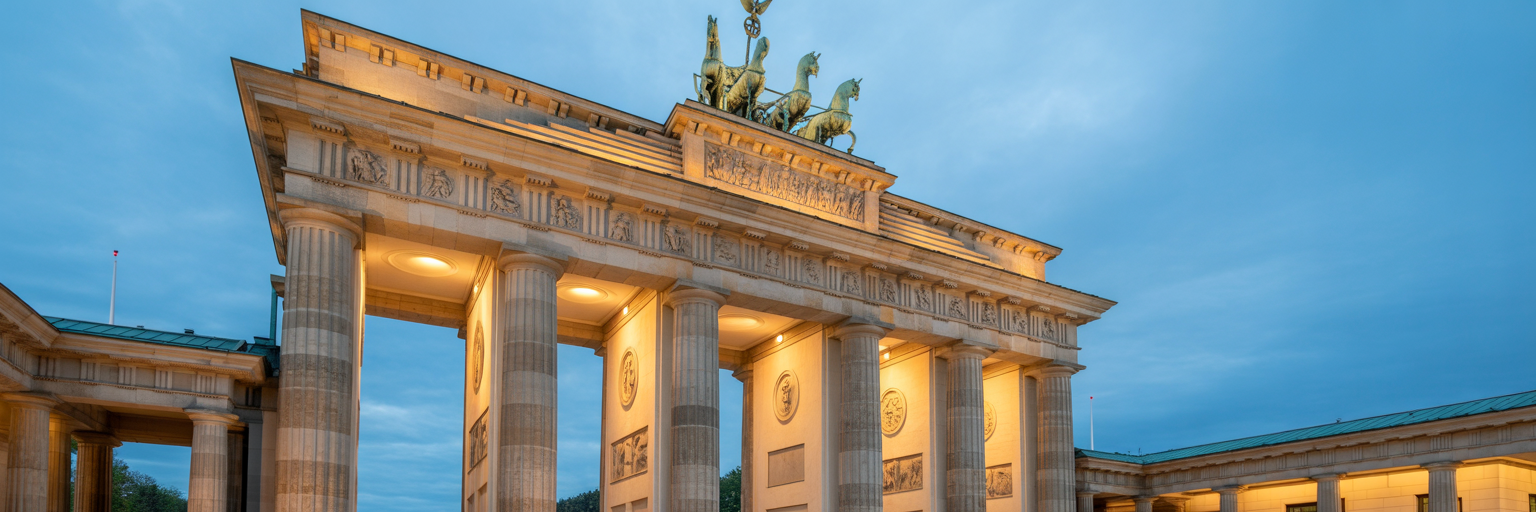
Few monuments have undergone such a powerful transformation of meaning as the Brandenburg Gate. Originally built in the 18th century as a neoclassical royal city gate, its modern story is one of division and reunification. During the Cold War, it stood isolated and inaccessible in the “death strip” of the Berlin Wall, a poignant symbol of a city and a continent torn in two. Today, it stands as the triumphant icon of German reunification and European peace.
The most profound experience at the gate is the simple act of walking through its grand columns. This physical passage from what was once East to West was impossible for an entire generation, and doing so is a quiet acknowledgment of the history that unfolded here. The gate does not stand in a vacuum; its meaning is amplified by its surroundings. To truly understand its weight, you must explore the area.
Just steps away is the Reichstag Building, the German Parliament, with its modern glass dome symbolizing political transparency. A short walk south leads to the powerful and unsettling Memorial to the Murdered Jews of Europe, a field of concrete slabs that serves as a stark reminder of the horrors of the Holocaust. Markers on the ground nearby show the exact path where the Berlin Wall once stood. Together, these sites create a dense historical landscape that tells the story of Germany’s turbulent 20th century. As the official Berlin tourism site notes, the gate “has been the backdrop for many historical events and has come to stand for both the division and the unification of Germany.” The Quadriga statue on top, a chariot of victory that was once stolen by Napoleon and later triumphantly returned, only adds to the monument’s enduring theme of resilience.
10. The Rijksmuseum: A Showcase of the Dutch Golden Age in Amsterdam
The Rijksmuseum is the definitive destination for understanding the Netherlands’ 17th-century Golden Age, a remarkable period when the small nation was a global superpower in trade, science, and art. The museum itself, a grand Gothic and Renaissance revival building, was designed to be a cathedral of culture. For a first-time visitor, the key is to have a focused plan to avoid being overwhelmed by its 8,000 objects on display.
Head straight to the museum’s heart: the magnificent Gallery of Honour on the second floor. This long hall is where the masterpieces of the Golden Age are concentrated, leading you directly to the collection’s crown jewel: Rembrandt’s The Night Watch. Do not just glance at it. Spend time with this revolutionary painting. Its dramatic scale, dynamic composition, and groundbreaking use of light and shadow broke all the conventions of group portraiture at the time.
The unique angle to understanding the Golden Age is to contrast Rembrandt’s drama with the quiet, light-filled intimacy of Johannes Vermeer’s domestic scenes. In the same gallery, you will find masterpieces like The Milkmaid. The stillness and serene beauty of Vermeer’s work provide a perfect counterpoint to Rembrandt’s energy, showing the incredible breadth of Dutch art. This makes the Rijksmuseum one of the most comprehensive Europe cultural sites for a specific era.
To get a fuller picture of the culture, look beyond the paintings. The museum also showcases intricate ship models that speak to Dutch maritime dominance and the iconic blue-and-white Delftware that decorated the homes of wealthy merchants. For a smooth visit, book a time slot online and consider using the museum’s excellent app, which offers guided tours that help you navigate the vast collection with purpose.
Weaving Your Experiences into a Lasting Memory

As your journey comes to an end, the real work of travel begins: weaving your experiences into a lasting memory. The common thread connecting these ten landmarks is that they are living stories, not static monuments. They are places of human triumph, tragedy, creativity, and resilience. Your first time travel to Europe is an opportunity to connect with these stories on a personal level.
Take a moment to reflect. Did the scale of the Colosseum make ancient history feel more tangible? Did the light filtering through the Sagrada Família’s windows evoke a sense of wonder you did not expect? Did walking through the Brandenburg Gate change your understanding of modern history? These moments of connection are what transform a trip into a transformative experience. They shift your perspective and stay with you long after you have returned home.
This journey can also serve as a foundation for future adventures. Perhaps your time in Rome sparked a desire to explore more of Italy, or the art in the Rijksmuseum inspired you to seek out other Golden Age masters. Europe is a continent of endless discovery, and this first trip is often just the beginning.
Ultimately, the understanding and memories you gain are the most valuable souvenirs you will bring back. The purpose of the journey was not just to see these places, but to carry their stories forward with you. As you begin to dream of and plan your next adventure, know that When In Your City will be here to help you discover the heart of your next destination.