The Rise of the Independent Group Traveler
Since 2020, online searches for solo travel have surged, cementing it as a significant force in modern tourism. Yet, a closer look reveals a fascinating evolution in what it means to travel alone. A new model has emerged in response to the modern traveler’s desires: traveling alone, but together. This isn’t your typical family vacation or a couples’ retreat. Instead, it’s a curated gathering of individuals, each on their own personal journey, who have chosen to share the path for a little while.
This shift reflects a deeper change in our travel priorities. We’ve moved beyond simply checking landmarks off a list. Many of us now seek authentic human connection and the kind of shared memories that last longer than a photograph. These trips inherently create a small, temporary community, where the unifying bond is a mutual passion for discovery. The person you share a laugh with over a strange local dish might be from a different continent, but in that moment, you are both just explorers.
A common misconception is that joining a group means surrendering your freedom. The reality is quite different. Think of it as structured independence. The logistical headaches, like booking reliable transport or finding safe, well-located accommodation, are handled by experts. This frees up your mental energy. Instead of spending hours staring at train schedules or hotel reviews, you can focus on absorbing the sights, sounds, and smells of a new city. The structure removes the hassle, not your autonomy.
The people drawn to these group trips for solo travelers are as diverse as the destinations themselves. You might meet a busy professional who craves an escape but lacks the weeks required to plan a complex itinerary. Or a digital nomad looking for a built-in community after months of working in solitude. Many are first-time solo travelers who want the adventure without the anxiety of a completely unsupported trip. And often, it’s simply someone whose desire to see the world doesn’t align with the schedules or interests of their friends and family. They are choosing not to wait.
Gaining Freedom Without the Loneliness
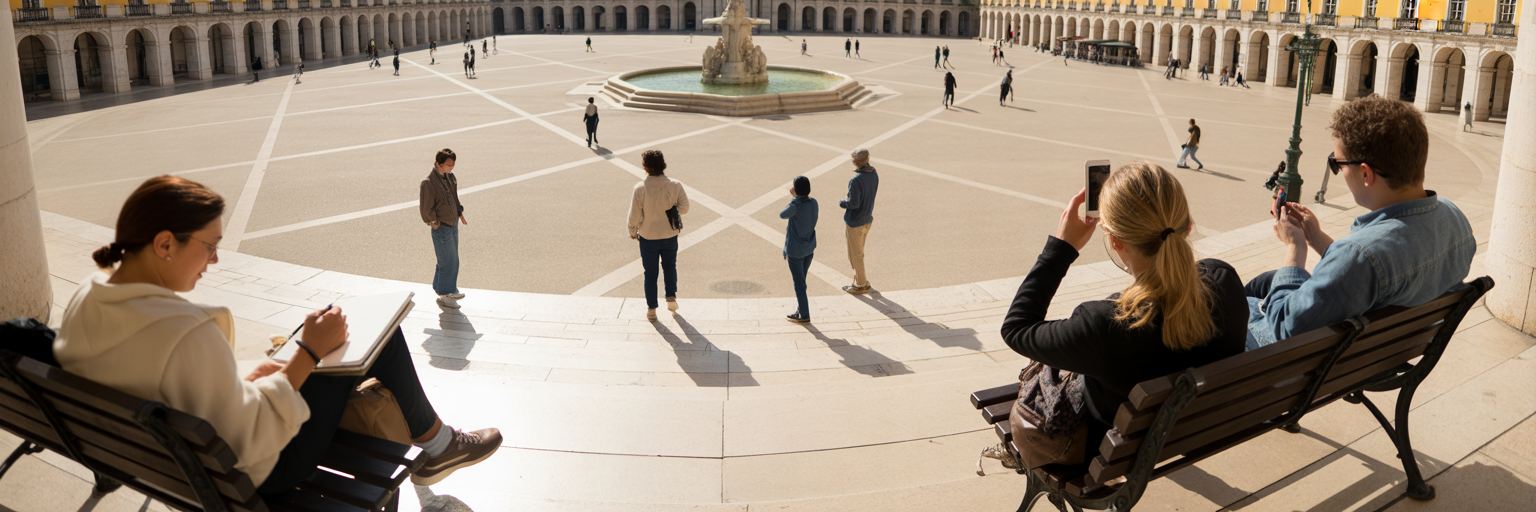
The primary motivation for traveling solo is often a single, powerful word: freedom. It’s the thrill of waking up and deciding your day’s entire agenda on a whim. The empowerment that comes from navigating a foreign subway system on your own, or the simple joy of spending three hours in a museum that only you find interesting. This model of travel celebrates and protects that autonomy. It understands that your journey is, first and foremost, yours.
However, anyone who has traveled alone for an extended period knows the other side of that coin. The initial excitement can sometimes fade into a quiet, creeping loneliness. It can hit you while you’re eating dinner alone for the fifth night in a row, or when you witness a breathtaking sunset and have no one to turn to and share the moment with. This feeling is a significant barrier that keeps many would-be adventurers at home. It’s the exact problem that traveling “alone together” solves.
The group functions as a social safety net. It provides a ready-made circle of companions for dinners, evening strolls, or just a simple chat over coffee. The constant pressure to be outgoing and forge new connections in every city disappears. You can be as social or as private as you wish, day by day. If you’re feeling gregarious, you have friends. If you need solitude, you can take it without feeling isolated from the world.
Let’s picture a day in Lisbon. The morning starts with the group exploring the historic Alfama district with a local guide, sharing laughs while navigating the narrow, winding streets. As the guided tour ends, the afternoon is declared free time. One person heads to the Calouste Gulbenkian Museum to see its unique art collection. Another goes hunting for handmade ceramics in the Baixa district. A third finds a quiet café to read, while two others decide to hike up to a viewpoint together. The freedom is absolute. Later, everyone reconvenes for an optional dinner, sharing stories of their individual adventures. This beautiful blend of shared experience and personal discovery is one of the core benefits of solo group travel.
Enhanced Safety and Logistical Simplicity
Beyond the social dynamics, this travel style offers powerful, practical advantages. For many, especially women, safety is a top concern when considering a solo trip. Traveling within a group provides an immediate and tangible layer of security. There is inherent safety in numbers, which can deter petty crime and provide a sense of comfort when exploring unfamiliar areas after dark. This is a key reason people actively seek out safe group travel for solo women. Should you feel unwell, get disoriented, or face an emergency, you have an instant support system.
The value of an expert trip leader cannot be overstated. They are your navigator, translator, and cultural guide all in one. The stress of deciphering complex transport maps, haggling in a foreign language, or unintentionally breaking a cultural norm is lifted from your shoulders. This allows you to be fully present and immersed in the destination, observing the world around you instead of worrying about the next step. Your role shifts from trip planner to pure adventurer.
This logistical simplicity extends to all the pre-arranged details. Imagine the hours saved by not having to research and book every hotel, train ticket, and entry permit. The mental energy preserved by avoiding the risk of booking errors or falling for tourist traps is immense. This built-in support system is a significant factor, as having a network on the road can ease feelings of loneliness and boost confidence, a benefit highlighted in Capital One’s research on solo travel groups.
Finally, there is the often-overlooked financial benefit. Tour operators can leverage their group buying power to secure discounts on accommodation, private transport, and guided activities. This frequently makes the overall trip more affordable than if you were to book the exact same components individually. It can also grant access to experiences, like a private cooking class or a chartered boat, that might be prohibitively expensive for a single traveler. The structure not only simplifies the journey but can also make it more accessible.
| Factor | Pure Solo Travel | Group Solo Travel |
|---|---|---|
| Logistics Planning | Individual is responsible for all research, booking, and scheduling. | Accommodation, transport, and key activities are pre-arranged by experts. |
| Safety & Security | Relies solely on personal vigilance and preparedness. | Inherent safety in numbers; immediate support from group and leader. |
| Social Interaction | Requires proactive effort to meet new people consistently. | Built-in community of like-minded travelers for instant companionship. |
| Cost Management | Costs are borne individually; group discounts are unavailable. | Access to group rates on accommodation, transport, and tours. |
| Problem Solving | Must navigate challenges like illness or cancellations alone. | Leader and group provide immediate assistance and support. |
A Catalyst for Confidence and Personal Growth

The practical benefits are clear, but the true transformation happens on a deeper level. This travel style is a powerful catalyst for personal growth, acting as a confidence multiplier. Imagine tackling a challenging high-altitude hike in Patagonia. Alone, you might second-guess your ability. But with a group cheering you on, sharing snacks and encouragement, you push past self-imposed limits. This shared momentum empowers you to achieve things you might not have attempted on your own, making it a perfect format for adventure travel for singles looking for a challenge.
Beyond personal achievement, the group itself becomes an informal classroom. You are surrounded by people from different walks of life, each with their own skills and knowledge. This is about more than just social chat; it’s about organic learning. The photographer in the group might share tips on how to capture the perfect sunrise. An architect could point out fascinating details on a historic building that everyone else missed. You absorb new perspectives without ever opening a textbook, creating a rich, multi-layered experience.
The supportive atmosphere also creates a low-stakes environment for stepping outside your comfort zone. The fear of looking foolish diminishes when you are part of a group all trying something new together. Whether it’s attempting a few words in a new language at a local market, joining an impromptu dance class, or sampling an intimidating-looking street food, the shared context makes experimentation feel safe and fun. You are more likely to say “yes” to new experiences.
This built-in community directly combats the anxiety and isolation that can sometimes accompany travel. Knowing you have a reliable support system makes the entire journey feel more restorative and less stressful. The confidence gained from navigating a foreign city with a group can translate into tackling any new place on your own, whether it’s a bustling metropolis or discovering the unique charm of a place like Bryan, Texas. You return home not just with memories, but with a renewed sense of capability and well-being.
Finding Your Perfect Travel Tribe
Once you’re sold on the concept, the next question is practical: how to find solo travel groups that are right for you? It’s important to understand that not all tours are created equal. There is a world of difference between a massive bus tour shuffling 50 people between photo stops and a small, curated group of 12 individuals exploring a region with intention. Your first task is to do a little self-reflection.
Ask yourself: what is the primary goal of your trip? Are you seeking high-adrenaline adventure, like trekking in the Himalayas or diving in the Red Sea? Is your focus on wellness and relaxation, like a yoga retreat in Bali or a spa-focused trip in the Italian countryside? Or are you driven by deep cultural immersion, with a desire for culinary tours, historical journeys, or art-focused explorations? Answering this question honestly is the crucial first step to narrowing down your options and finding a group of like-minded people.
Once you know what you want, it’s time to research. Here is a checklist of key factors to evaluate when looking at a travel company:
- Group Size: Smaller groups, typically between 8 and 16 people, are far better for fostering genuine connections and allow for more flexibility. You become a travel companion, not just a number.
- Age Demographic: While multi-generational trips can be wonderful, traveling with people in a similar life stage often means you’ll share a similar energy level and cultural references. Look for companies that are transparent about their typical client age range.
- Physical Activity Level: This is critical. Be honest with yourself about your fitness. If a trip is rated as “strenuous,” believe it. Matching your physical ability to the trip’s demands is essential for your enjoyment and the group’s cohesion.
- Price and Inclusions: Look closely at what is covered. Does the price include all meals or just breakfast? Are entrance fees to major sites part of the package? A seemingly cheaper trip can become expensive if it’s loaded with hidden costs.
Learn to read an itinerary like an expert. Look for the phrases that signal a company values independence, such as “afternoon at your leisure,” “optional excursion,” or “free day for exploration.” A good itinerary gives you the space to explore a neighborhood in depth, much like you would using a local’s guide to a place like Temple, Texas, allowing for personal discovery. Before committing to a tour, you can explore various destinations through detailed city guides to see what sparks your interest. This balance between planned activities and personal time is the hallmark of a great group solo trip.
The Hybrid Model: Designing a Two-Part Journey
For the traveler who wants both the community of a group and the complete freedom of going it alone, there is an advanced strategy: the hybrid journey. This approach strategically combines a structured group tour with a period of fully independent solo travel, either before or after. It’s a way to truly get the best of both worlds.
Starting your trip with a group tour can be the perfect “on-ramp” to a new country, especially one that feels culturally distant or logistically complex. The group portion serves as a comprehensive orientation. You acclimate to the local customs, learn key phrases, figure out the currency, and get a feel for the rhythm of the place, all within a supported environment. This experience equips you with the knowledge and confidence to venture out on your own for the second leg of your journey.
Alternatively, adding a solo leg at the end of a tour offers a different kind of advantage. It gives you the flexibility to act on the inspiration sparked during the group trip. Perhaps you fell in love with a particular city and want to explore it more deeply, or maybe the tour introduced you to a region you now want to see at your own, unhurried pace. This structure allows for deeper, more personal discovery after the initial highlights have been covered.
To make this tangible, consider two examples. A traveler could join a 12-day group tour exploring the highlights of Peru, from Lima to the Sacred Valley and Machu Picchu. Afterward, they could spend four days on their own in Cusco, relaxing in cafes, shopping at local artisan markets, and soaking in the atmosphere. Or, a traveler heading to Southeast Asia could arrive in Thailand a week early for a solo beach retreat to decompress before joining a 10-day group adventure exploring the temples and jungles of the north. This solo portion is where you can dive deep into a specific area at your own pace, perhaps using a detailed guide to uncover the unique character of a place like Longview, Texas, applying that same principle of focused exploration anywhere in the world.
Preparing for Your First Group Solo Adventure
Once you’ve chosen your trip, a little mental preparation can make all the difference. It’s important to set realistic social expectations. While you will meet fascinating people, the primary goal is a positive shared experience, not necessarily finding a new best friend for life. Be open, friendly, and engaged, but also be comfortable with taking downtime for yourself. The beauty of this model is that you don’t have to be “on” all the time.
More than anything, cultivate a flexible and open-minded attitude. Group travel, by its very nature, involves compromise. An itinerary might shift due to weather, a restaurant choice might be made by group consensus, or a travel day might take longer than planned. A “go-with-the-flow” mindset is essential for a harmonious trip. Seeing these small deviations as part of the adventure, rather than as problems, will dramatically improve your experience and that of everyone around you.
Finally, here are a few practical tips to ensure a smooth journey:
- Pack light, but bring layers. You might experience multiple climates on one trip, and layers are more versatile than a single heavy coat.
- Always carry a portable charger. Long travel days with multiple stops can drain your phone battery, which is often your camera, map, and connection to the world.
- Bring a good book, journal, or headphones. These are essential for personal downtime during long bus rides or quiet evenings.
- Carry a small amount of local currency. Even in places where credit cards are widely accepted, you’ll need cash for small purchases, tips, or local markets.
With the right preparation and mindset, you’re ready to embark on an adventure that offers the perfect balance of independence and connection.