Understanding Tucson’s Desert Soul
When people hear Tucson is a UNESCO City of Gastronomy, they might picture white tablecloths and fancy tasting menus. That isn’t the whole story. The title is a nod to a 4,000-year history of agriculture in this valley, a heritage that shapes the city’s entire character. It’s a place built on deep roots, not fleeting trends. This is the foundation of any authentic Tucson travel guide: understanding that the city’s soul is baked into the very soil it sits on.
While it’s Arizona’s second-largest city, Tucson operates with the heart of a much smaller town. We call it “The Old Pueblo” for a reason. It’s a nickname that speaks to the layers of history you feel just walking around. The city is a living blend of cultures, a trifecta of influences that you can’t ignore. The foundational Native American heritage of the Tohono O’odham people is ever-present, woven into the land and traditions. This is layered with a deep Hispanic culture that defines the city’s architecture, food, and language, all mixed with the progressive, intellectual energy radiating from the University of Arizona.
This mix creates an identity that is proudly unpolished. Tucson doesn’t try to be Phoenix or Scottsdale. There’s a sun-baked aesthetic here, a preference for substance over superficial gloss. You see it in the adobe architecture that blends into the landscape, the xeriscaped yards full of prickly pears and palo verde trees instead of thirsty lawns, and a general vibe that values authenticity. People here are more interested in a good conversation at a dive bar than being seen at a flashy club.
You also can’t understand Tucson without looking up at the mountains. The city is cradled by five distinct mountain ranges: the Santa Catalinas, the Rincons, the Santa Ritas, the Tucsons, and the Tortolitas. They aren’t just pretty scenery. They are an integral part of the local psyche, dictating weather patterns, offering an escape from the summer heat, and providing a constant, grounding presence. For locals, these mountains are a compass, a playground, and a daily reminder of our connection to the Sonoran Desert.
Your Weekend Plans Sorted: Local Favorites

Tourists might check off a list of attractions, but locals experience Tucson through rituals and routines tied to the landscape and community. Knowing these patterns is the key to finding the real rhythm of the city. It’s less about what you do and more about how and when you do it. These are the spots that make up the fabric of daily life, the places where you’ll find residents enjoying their city.
The Local’s Approach to the Great Outdoors
The Catalina Highway isn’t just a scenic drive; it’s our escape route. When the valley floor hits 105 degrees in July, driving up Mount Lemmon is a non-negotiable ritual. The temperature drops as you ascend through different ecosystems, from saguaros to pine forests. Locals pack a picnic and head to Summerhaven for the cool air, but the real magic is stopping at Windy Point Vista on the way down to watch the sunset paint the entire city orange and pink. Similarly, while tourists flock to Sabino Canyon for the midday tram ride, locals are there at sunrise, getting in a walk or run along the paved path before the heat and crowds arrive. For a quick urban workout with a panoramic reward, Tumamoc Hill is the go-to. It’s a steep, paved walk that’s packed every morning and evening with Tucsonans of all ages, a shared challenge that ends with one of the best views of the city lights.
Downtown and 4th Avenue: The Real Vibe
Downtown Tucson and 4th Avenue are right next to each other, but they offer completely different flavors. A proper Tucson neighborhood guide has to distinguish between the two. Congress Street downtown has a historic, slightly more grown-up feel. It’s where you go to see a show at the beautifully restored Rialto Theatre or the classic Fox Tucson Theatre, followed by a craft cocktail. Just a short walk under the underpass, 4th Avenue is the city’s bohemian heart. It’s a quirky, laid-back strip of independent shops, funky bars, and casual eateries. It’s where you’ll find university students, lifelong hippies, and everyone in between. The vibe is less about seeing and being seen and more about finding a comfortable patio to relax on.
Annual Events That Define the Community
Certain events are woven into the city’s identity. The All Souls Procession in November is the most powerful example. It’s not a party or a parade but a massive, grassroots ceremony where thousands walk to honor loved ones who have passed. It’s deeply personal and profoundly communal. On a different note, the Tucson Gem and Mineral Show takes over the city every February. For residents, it means a buzz of international visitors and, admittedly, a bit of traffic. But it also brings a unique energy and a chance to see incredible things from all over the world. On a weekly basis, the Heirloom Farmers Market at Rillito Park is more than just a place to buy produce. It’s a Saturday morning social hub where you’re guaranteed to run into someone you know. These are some of the best local things to do in Tucson because they are driven by the community itself. The unique character of these neighborhoods and hangouts is something special, and if you enjoy discovering places with strong local identities, you might appreciate our guide to Conroe, Texas, which offers a different but equally authentic experience.
Discovering Tucson’s Best-Kept Secrets
Once you’ve settled into the local rhythm, you can start exploring the places that are hiding in plain sight. These are the spots that don’t make it into most travel brochures, the quiet corners and quirky landmarks that hold a special place in the hearts of residents. Finding these Tucson hidden gems feels like being let in on a secret, offering a deeper connection to the city’s unique character.
Historic Neighborhoods Hiding in Plain Sight
Just west of the downtown convention center lies Barrio Historico, one of the most photogenic neighborhoods in the country. Walking through its quiet streets feels like stepping back in time. The brightly colored adobe row houses, with their vibrant doors and shared walls, create a stunning visual tapestry. It’s a residential area, so the experience is about a peaceful stroll, absorbing the history and the incredible colors. A few miles away, the Sam Hughes neighborhood offers a different kind of historic charm. Known for its early 20th-century brick bungalows, leafy streets, and well-tended gardens, it’s a perfect place for a bike ride or a long walk, showcasing a different era of Tucson’s architectural history.
Quiet Corners of the Sonoran Desert
Saguaro National Park is famous, but locals often have a preference. While the East district is beautiful, many of us favor Saguaro National Park West. The saguaro forests there feel denser, and the Bajada Loop Drive is a fantastic dirt road that gets you up close with the desert giants. For the quintessential Tucson sunset, everyone knows about “A” Mountain, but the real local spot is Gates Pass. The drive itself, winding through the Tucson Mountains, is spectacular. Find a spot to park, climb up on a rock, and watch the sun dip below the horizon. It’s a nightly ritual for many, and the view is absolutely unparalleled.
Quirky Landmarks with Local Heart
Tucson has a soft spot for the eccentric and artistic. The DeGrazia Gallery in the Sun is a perfect example. Built by artist Ted DeGrazia, this sprawling adobe compound is as much a work of art as the paintings inside. It’s a rustic, beautiful space that perfectly captures the spirit of the Sonoran Desert. For something truly whimsical, there’s the Valley of the Moon, a storybook land built from stone and imagination in the 1920s. It’s a non-profit dedicated to fostering kindness and creativity in children, and its charming, slightly spooky grounds are a beloved local treasure. Finally, for shoppers in the know, there’s the Lost Barrio. It’s not a neighborhood but a small cluster of warehouses on Park Avenue filled with high-end furniture and decor imported from around the world. It feels like a secret discovery every time you visit. This spirit of exploration is contagious, and if you’re inspired to find more off-the-beaten-path destinations, you might enjoy what’s covered in our local’s guide to Temple, Texas.
A Foodie’s Guide to Tucson’s Local Eats
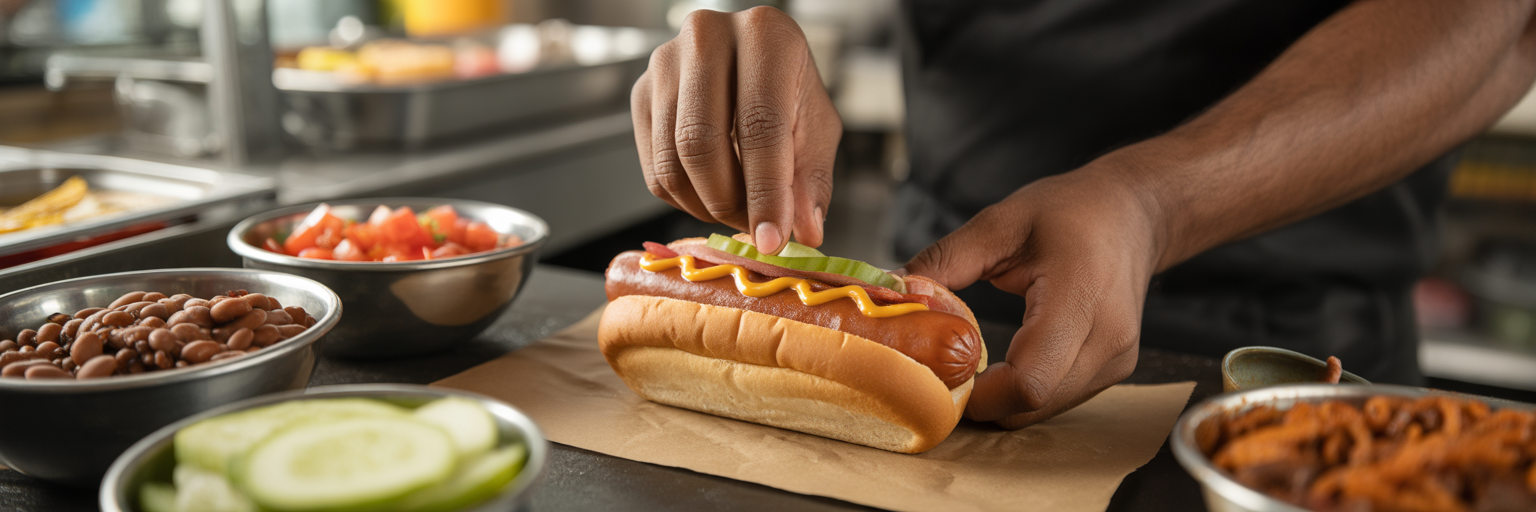
As mentioned, Tucson’s UNESCO City of Gastronomy status is about heritage, not hype. The food scene here is defined by family-owned restaurants, generations-old recipes, and a direct connection to the Sonoran Desert. You won’t find the best local restaurants in Tucson by looking for what’s trendy; you’ll find them by looking for what’s stood the test of time. This is a city where a humble hot dog can be a culinary icon and where some of the best meals are served from a cart or a tiny, unassuming storefront. Forget the chains. This is where you really eat in Tucson.
The Sonoran Dog: Tucson’s Signature Street Food
You cannot talk about Tucson food without starting with the Sonoran Hot Dog. It’s a perfect symbol of the city’s cross-border culture. A bacon-wrapped hot dog is tucked into a soft, fluffy bolillo roll and then loaded with pinto beans, grilled onions, fresh onions, tomatoes, mayonnaise, mustard, and jalapeño salsa. It’s a masterpiece of flavor and texture. Legendary spots like El Guero Canelo are institutions. The atmosphere is loud, lively, and completely no-frills. You order at the counter, grab a seat at a picnic table, and load up on roasted peppers and radishes from the salsa bar. It’s more than a meal; it’s a cultural experience.
Beyond the Hot Dog: Authentic Sonoran Cuisine
The Sonoran style of Mexican food is distinct. It’s rancher food, characterized by beef, flour tortillas, and chiles. The pinnacle of this is carne seca, beef that is air-dried in cages on rooftops, then shredded and rehydrated with spices. The place to try it is El Charro Café, which claims to be the oldest family-run Mexican restaurant in the country. Ordering their carne seca plate is a taste of history. But Tucson’s food scene isn’t stuck in the past. A place like Tumerico represents the modern evolution of local flavor. Chef Wendy Garcia creates incredibly inventive, plant-based Latin food with a menu that changes twice a day based on what’s fresh. It has a massive cult following for a reason.
The Diverse Flavors of the Old Pueblo
While Sonoran food is king, the city’s culinary diversity is impressive. For a meal that is creative and consistently surprising, locals head to Feast. The menu changes every single month, driven entirely by the whims and inspirations of the chef-owner. It’s a place for people who love food and trust the kitchen to deliver something amazing. For an experience that blends history with modern dining, Maynards Market & Kitchen, located in the historic train depot, is a fantastic choice. You can have a fine dining meal in the kitchen or a more casual bite in the market, all while watching the trains roll by. Highlighting Tucson’s rich food history provides a great opportunity to show readers that we cover culinary scenes in other cities too, like with our guide on where to eat in Longview, Texas.
| Dish | Key Components | A Local’s Go-To Spot | Why It’s a Tucson Staple |
|---|---|---|---|
| Sonoran Hot Dog | Bacon-wrapped hot dog, bolillo roll, pinto beans, onions, tomatoes, mayo, mustard, jalapeño salsa | El Guero Canelo | Represents the city’s cross-border culinary fusion and street food culture. |
| Carne Seca | Air-dried, shredded beef, often spiced and rehydrated with chiles, tomatoes, and onions | El Charro Café | A heritage food that connects Tucson to its ranching and Sonoran Desert history. |
| Cheese Crisp | A large, thin flour tortilla baked until crispy, topped with melted cheese (and optional toppings) | Mi Nidito | A simple, beloved comfort food that is a staple appetizer across the city. |
| Raspado | Shaved ice topped with fruit syrups, fresh fruit, and often sweetened condensed milk or ice cream | Oasis Fruit Cones | The essential desert treat for cooling down during the hot summer months. |
The Rhythm of Daily Life in the Old Pueblo
Understanding the day-to-day reality of living in Tucson Arizona, is about tuning into its unique rhythm. The pace of life here is noticeably slower than in most big cities. People aren’t in a frantic rush, which translates to friendlier interactions at the grocery store and traffic that, while it has its moments, is generally manageable. There’s a deliberate quality to life here, a sense that people prioritize well-being over constant hustle.
The biggest influence on daily life is undoubtedly the weather. Tucson has a biphasic lifestyle, especially in the summer. From June to September, the city comes alive in the early mornings and after the sun goes down. The middle of the day is a quiet lull, a time for siestas or indoor activities. Then, from October to April, the weather is glorious, and life moves outdoors. Patios are full, hiking trails are busy, and the entire city seems to collectively exhale and enjoy the perfect temperatures.
The community culture is unpretentious and fiercely independent. There is a powerful “support local” ethos that feels less like a trend and more like a core value. People are proud of the city’s unique businesses and artists and will go out of their way to support them. It’s a genuinely friendly place, but not in a superficial way. People are welcoming, but they also value authenticity and have little patience for pretense.
From a practical standpoint, the cost of living is a huge part of Tucson’s appeal. While prices are rising, as they are everywhere, the city remains more affordable than many other Western destinations. For instance, a 2023 Forbes Advisor analysis found that Tucson’s overall cost of living is 6% lower than the national average, with housing costs being significantly more affordable than in other major metropolitan areas. This affordability allows a diverse mix of people to call Tucson home, from students and artists to retirees and families. It’s this balance of affordability, a strong sense of community, and a lifestyle deeply connected to the desert that truly defines the experience of living here. After getting a comprehensive look at Tucson, you can continue your journey by exploring other unique American cities in our collection of city guides.