San Francisco doesn’t just sit on the edge of the continent; it feels like a city shaped by it. Its identity is forged in equal parts by engineering marvels and raw, natural beauty. For any first-time visitor, understanding this city begins with its two most dominant features: a bridge that defied the impossible and an island prison that held the inescapable.
The City’s Unmistakable Icons
Before you wander through its colorful neighborhoods or taste its famous foods, you should first stand in the presence of its giants. The Golden Gate Bridge and Alcatraz Island are more than just popular San Francisco tourist attractions; they are the foundational pillars of the city’s story. They represent San Francisco’s ambition, its complex history, and its relationship with the powerful bay it calls home. Visiting them first provides an essential context that makes every other experience in the city richer and more meaningful.
The Golden Gate Bridge Experience
Seeing the Golden Gate Bridge in a picture is one thing. Feeling it is another entirely. The best way to connect with this icon is to get on it. The 1.7-mile walk or bike ride across its span is a sensory immersion. You feel the constant, humming vibration of traffic through your feet and the sharp, salty wind coming off the Pacific. The sheer scale of the towers and cables overhead makes you appreciate the audacity of its construction in the 1930s. It’s a walk that transforms an abstract landmark into a tangible, breathtaking reality.
Capturing the perfect photo requires knowing where to go. For the best views of Golden Gate, you have several excellent options. On the San Francisco side, the Presidio offers classic perspectives, while walking down to Fort Point places you directly underneath the bridge’s southern anchor, offering a dramatic upward angle. Across the bay in Marin, Vista Point provides a postcard-perfect shot right at the bridge’s northern end. For a more rugged and expansive panorama, continue up into the Marin Headlands. The winding roads lead to overlooks that frame the bridge with the entire city skyline behind it.
A crucial piece of local knowledge involves the city’s famous fog, affectionately named Karl. It can roll in without warning, completely obscuring the bridge. Don’t be discouraged; its misty tendrils wrapping around the orange towers can be a beautiful sight in itself. However, for the clearest views, plan your visit for early morning or late afternoon, when the marine layer often burns off or has yet to settle in.
The Infamous Alcatraz Island
A short ferry ride from the bustling waterfront lies a place of stark silence and chilling stories. A visit to Alcatraz is a compelling journey into one of America’s most notorious chapters. Let’s be clear: booking tickets is not a casual affair. This is one of those visiting Alcatraz Island tips that cannot be overstated. You must book your spot months in advance through the single official vendor. Spontaneous trips are nearly impossible, as tickets are consistently sold out.
Once on the island, the experience is defined by the award-winning “Doing Time” audio tour. This isn’t a dry, historical narration. You hear the voices of actual former inmates and correctional officers telling their stories in the very cells and corridors where they lived them. The clanging of cell doors, the shouts from the dining hall, and the personal accounts of escape attempts create an immersive atmosphere that is both haunting and deeply human. It transforms the cold stone into a living museum of justice, desperation, and survival. Tickets, which cost around $48 according to tourism guides, are known to sell out months ahead of time, making advance planning absolutely critical.
Logistics for Visiting the Landmarks
Reaching these icons requires some planning. For the Golden Gate Bridge, driving and parking can be a significant challenge, with limited and often full lots. A much better approach is to use public transportation. The PresidiGo shuttle offers free and convenient access to the bridge from downtown. For Alcatraz, the process is more straightforward. Ferries depart from a single location, Pier 33. Be prepared for a commitment; the entire experience, including the round-trip boat journey and the island tour, will take a minimum of 2.5 to 3 hours. By tackling these two landmarks first, you gain an appreciation for both the city’s engineering genius and its layered, often dark, history before you explore its more intimate corners.
Exploring Vibrant Neighborhood Cultures
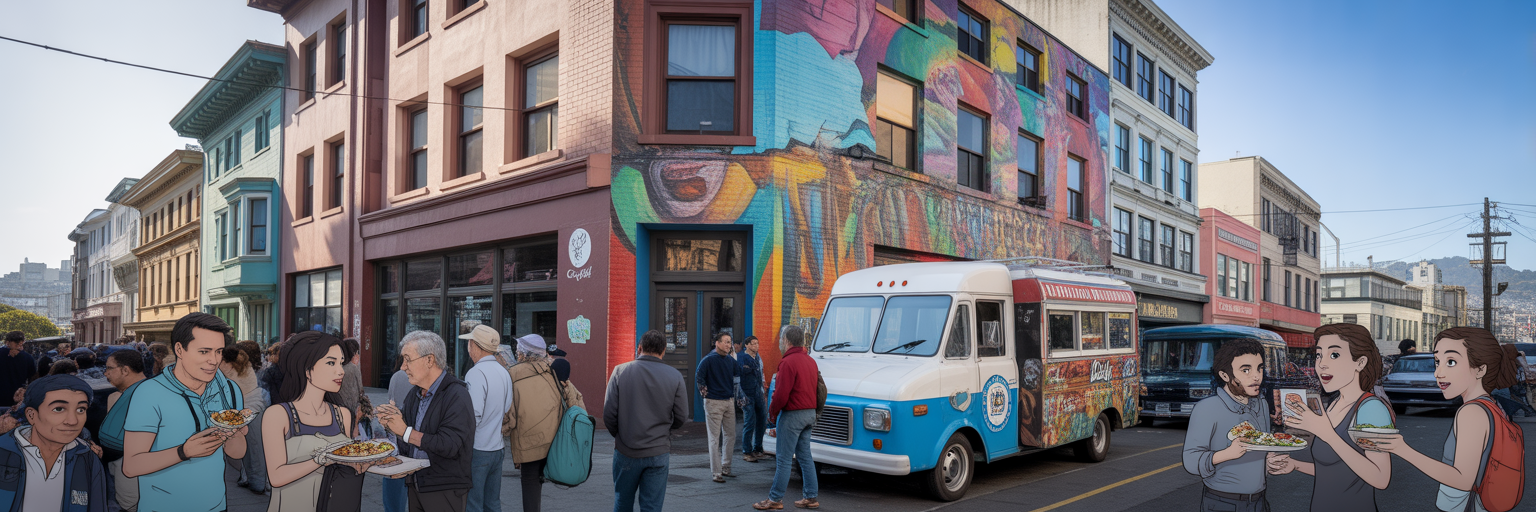
After taking in the monumental scale of the bridge and the bay, the next step is to zoom in. San Francisco’s true character is found in its distinct neighborhoods, each a self-contained world with its own history, flavor, and rhythm. This San Francisco neighborhood guide is about trading grand vistas for vibrant street scenes and tourist hubs for local hangouts. The best way to explore is on foot, allowing the city to reveal itself one block at a time.
The Mission District’s Latin Heartbeat
The moment you step into the Mission, the energy shifts. It’s a neighborhood that wears its heart on its sleeve, or more accurately, on its walls. A walk through Clarion and Balmy Alleys is like visiting an outdoor art gallery, with powerful murals depicting decades of political struggles, cultural celebrations, and community pride. The art is raw, vibrant, and tells the story of the neighborhood’s Latin American roots. On a sunny weekend, the place to be is Dolores Park. The sloping green lawn becomes a patchwork of blankets, with locals gathering to relax, listen to music, and soak in the city views. It’s the city’s collective backyard.
You cannot leave the Mission without trying its culinary masterpiece: the Mission-style burrito. This is not just a burrito; it’s a forearm-sized parcel of rice, beans, meat, salsa, and other fillings, all expertly wrapped in a steamed flour tortilla. The key to an authentic experience is finding a taqueria where the line is long, the Spanish is flowing, and the focus is on fresh ingredients, not fancy decor. It’s a perfect, portable meal that fuels the neighborhood.
Historic Chinatown’s Labyrinthine Charm
San Francisco’s Chinatown is the oldest in North America, and while Grant Avenue offers the iconic dragon gate and souvenir shops, the real magic lies in its side streets. Duck into the narrow alleys to find where the community’s daily life unfolds. You’ll discover the distinct aroma of traditional herbalist shops, where ancient remedies are still prescribed. At the Golden Gate Fortune Cookie Factory, tucked away on Ross Alley, you can watch workers fold messages into cookies by hand, a tradition that has been going on for decades. For food, follow the locals. Look for a dim sum restaurant where the carts are constantly moving and the tables are filled with families. It’s in these moments, away from the main tourist path, that you feel the true pulse of this historic enclave.
North Beach’s European and Beatnik Soul
North Beach offers a fascinating blend of Italian heritage and counter-cultural history. The air is thick with the scent of roasting espresso from its many sidewalk cafes, and classic delis display cured meats and cheeses in their windows. It feels like a small slice of Europe. But this neighborhood was also the epicenter of the Beat Generation in the 1950s. A pilgrimage to City Lights Bookstore is essential. It’s not just a shop but a literary landmark that continues to champion free expression. After soaking in the literary history, get your heart pumping by climbing the Filbert Street steps. This steep wooden staircase winds through lush gardens and past charming houses, offering a rewarding workout. At the top, you’re greeted by Coit Tower and its panoramic views, and if you’re lucky, you might spot the famous flock of wild parrots that call the area home.
The strategy for all these neighborhoods is the same: put away the map for a little while. Embrace getting a little lost, follow the scent of good food, and spend your money at the small, family-owned shops. This method of immersing yourself in local culture is a philosophy we apply across all our city guides, helping travelers find the true character of a place.
Waterfront Wonders and Pier-Side Fun
Fisherman’s Wharf is an area many seasoned travelers might be tempted to dismiss as a tourist trap. It’s loud, it’s crowded, and it’s unapologetically commercial. But to skip it entirely would be a mistake. The key is to navigate it with a plan. There are genuine charms to be found here among the souvenir stalls and chain restaurants. The smell of salt and fried seafood, the sound of street performers, and the incredible views of Alcatraz and the Golden Gate Bridge are all part of the quintessential San Francisco experience. Knowing what to look for is how you find the fun in one of the most famous things to do in Fisherman’s Wharf.
The Famous Sea Lions of Pier 39
One of the most beloved attractions on the waterfront arrived unexpectedly. After the 1989 Loma Prieta earthquake, a small group of sea lions began gathering on the docks of Pier 39. The numbers grew, and the boisterous, barking colony quickly became a permanent fixture. Today, hundreds of them can be seen lounging, wrestling, and sunbathing on the floating platforms. Viewing them is completely free from the pier’s decks, and their playful antics are endlessly entertaining. For those curious to learn more, the nearby Sea Lion Center offers educational exhibits about the animals and their history in the bay. It’s a wonderful, organic attraction that brings a touch of wild nature to the bustling pier.
Beyond the Main Pier
Just a short walk from the busiest sections of the Wharf are two attractions that offer a more refined and historical experience. Ghirardelli Square, once the site of the famous chocolate factory, has been beautifully repurposed into a plaza of boutique shops and restaurants. Of course, no visit is complete without indulging in a decadent ice cream sundae, a tradition that feels right at home in the historic brick buildings. A few blocks further west lies the San Francisco Maritime National Historical Park at Hyde Street Pier. Here, you can step back in time by boarding a fleet of magnificent historic vessels, including a 19th-century square-rigger and an old paddlewheel ferry. It’s a tangible connection to the city’s seafaring past and a quiet escape from the crowds.
A Taste of the Waterfront
You will see signs for it everywhere: clam chowder in a sourdough bread bowl. It’s the signature dish of the waterfront, but quality can vary dramatically. How do you avoid a disappointing, watery soup served in stale bread? The secret is to look for signs of authenticity. A great bread bowl experience comes from a place that takes pride in its ingredients. Here are a few things to watch for:
- On-Site Bakeries: Look for establishments that bake their own sourdough bread. The aroma of fresh bread is a promising sign that they care about the foundation of the dish.
- Chowder Consistency: A good clam chowder should be thick, creamy, and full of clams. If it looks thin or watery, it’s likely a mass-produced product.
- The Local Line: Observe who is waiting to order. If you see construction workers, police officers, or other locals grabbing lunch, you’ve probably found a reliable spot.
Finding a quality version of this classic dish is a rewarding experience that lets you taste a true piece of San Francisco’s culinary identity.
Parks, Palaces, and Panoramic Views
Beyond the dense urban grid and bustling waterfront, San Francisco unfolds into grand open spaces designed for recreation, reflection, and breathtaking perspective. These parks and landmarks offer a necessary counterbalance to the city’s high energy, providing places to walk, wonder, and see the city from a different angle. They are the city’s lungs, offering fresh air and stunning beauty in equal measure.
Adventures in Golden Gate Park
First, let’s set the scale: Golden Gate Park is enormous. Stretching three miles from the city center to the Pacific Ocean, it is larger than New York’s Central Park. Trying to see it all in one day is impossible. The best approach is to choose a few distinct experiences. For a moment of tranquility, step into the meticulously manicured landscape of the Japanese Tea Garden, the oldest of its kind in the United States. Art lovers can explore world-class collections at the de Young Museum, while science enthusiasts can marvel at the four-story rainforest and living roof of the California Academy of Sciences. For a simple, classic pleasure, rent a paddle boat on Stow Lake and glide around Strawberry Hill, the island at its center. Each of these offers a unique window into the park’s diverse character.
The Greco-Roman Elegance of the Palace of Fine Arts
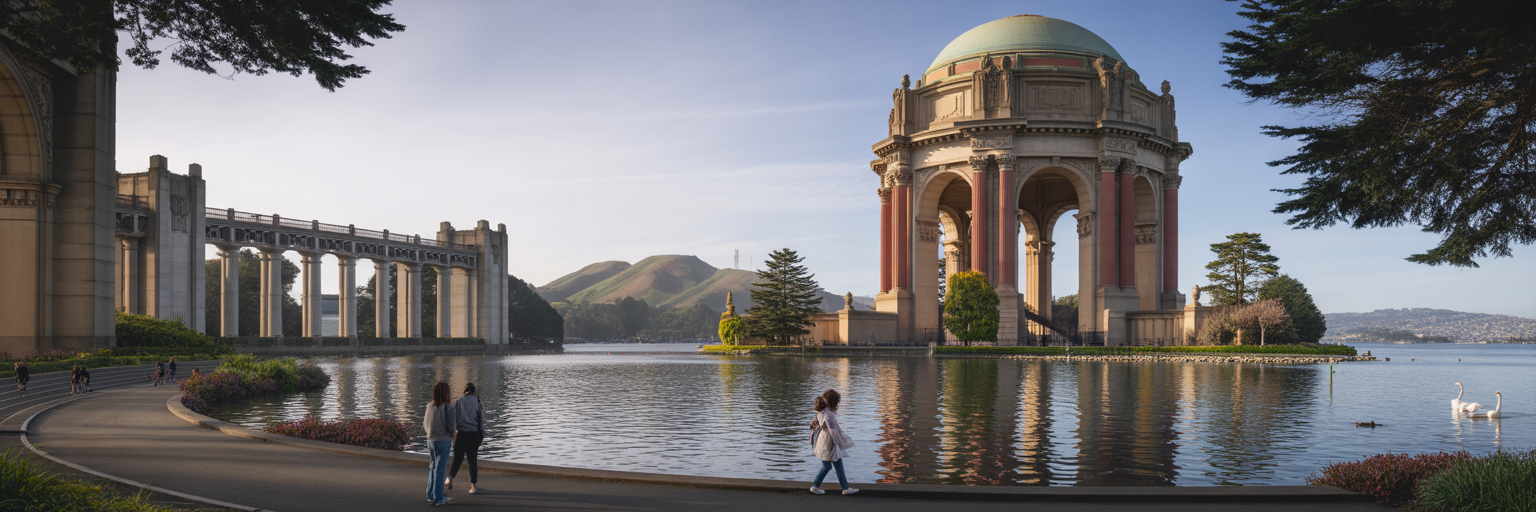
Standing before the Palace of Fine Arts feels like discovering a beautiful ruin from another time and place. This stunning Greco-Roman rotunda, with its soaring columns and tranquil lagoon, is actually a remnant of the 1915 Panama-Pacific Exposition. It was built to evoke a sense of romantic, melancholic beauty, and it succeeds completely. It’s not a museum or an attraction with an entry fee; it’s simply a place for a peaceful walk. The path around the lagoon, often populated by swans and ducks, is a favorite spot for photographers and anyone seeking a serene escape from the city’s pace. Its slightly weathered, grand appearance makes it one of the most picturesque and contemplative spots in San Francisco.
Salesforce Park: A Modern Urban Oasis
In stark contrast to the historical elegance of the Palace, Salesforce Park represents the city’s modern identity. This 5.4-acre park is an engineering marvel, built four stories above the street on the roof of a massive transit center. A walking trail winds through gardens featuring plants from around the world, while open lawns and amphitheaters host everything from yoga classes to concerts. What makes it so unique are the views it offers from within the downtown skyline. You are surrounded by skyscrapers, yet enclosed in a green sanctuary. It’s a symbol of contemporary urban design and a testament to San Francisco’s ongoing innovation.
Chasing the Best City Vistas
While the Golden Gate Bridge offers iconic views, seeing the entire city spread out before you requires a different vantage point. For an unparalleled 360-degree panorama of the entire Bay Area, the drive or hike up to Twin Peaks is essential. From this central point, you can see the Golden Gate Bridge, Alcatraz, the downtown skyline, and the sprawling East Bay. It puts the entire geography of the region into perspective. For a more relaxed, local-favorite view, head back to Dolores Park. Sitting on the upper slope on a clear day provides a perfect frame of the downtown skyline, a view enjoyed by San Franciscans every day.
A Deep Dive into Art and History
For those days when the fog is too thick or for travelers who find their energy in art and artifacts, San Francisco offers a collection of world-class museums. These institutions are more than just rainy-day alternatives; they provide a deeper understanding of the creative forces and cultural currents that have shaped the city. A visit to one of these museums is a chance to connect with the city’s soul.
Modern Masterpieces at SFMOMA
The San Francisco Museum of Modern Art (SFMOMA) is a must-visit for anyone with an interest in contemporary art. The building itself is a work of art, with a striking white facade and a light-filled interior. Inside, you’ll find an impressive collection of works by 20th-century masters alongside cutting-edge pieces from today’s most innovative artists. Beyond the galleries, the museum offers unique features like a massive outdoor living wall, one of the largest in the country, and several sculpture terraces that blend art with open air. It’s a dynamic institution that reflects the forward-thinking spirit of the city.
The Richness of the Asian Art Museum
San Francisco’s identity is deeply intertwined with the cultures of Asia, and there is no better place to explore this connection than the Asian Art Museum. A visit here is not just an art history lesson; it’s a journey into the multicultural fabric of the city itself. Home to one of the most comprehensive collections of Asian art in the world, the museum spans 6,000 years of history and covers cultures from Turkey to China. By exploring its galleries, you gain a more profound appreciation for the traditions and aesthetics that have influenced San Francisco for generations. It provides crucial context for understanding the city you see outside its walls.
Niche Museums for Specific Interests
Beyond the major institutions, San Francisco is home to several smaller, specialized museums that cater to unique passions. These hidden gems often provide some of the most memorable experiences.
- The Cable Car Museum: This fascinating museum is completely free and located in the actual powerhouse that runs the city’s famous cable car system. You can stand over the massive, spinning wheels and cables that pull the cars up and down the steep hills.
- The Walt Disney Family Museum: Situated in the Presidio, this museum is a deep and personal look at the life of Walt Disney. It’s a must for fans of animation, storytelling, and the history of this cultural icon.
Strategic Museum Visiting
The sheer number of options can be overwhelming, leading to the dreaded “museum fatigue.” The key to a great cultural experience is to be strategic. Before you go, check online for museum free days, which can save you money, though be aware they are often crowded and may only apply to residents. Always book your tickets online in advance to skip the long entry lines. Most importantly, resist the urge to see everything. Choose one or two museums that genuinely interest you and give yourself the time to enjoy them fully. A deep, unhurried visit to one institution is far more rewarding than a frantic rush through several.
Practical Advice for a Flawless Trip
A great trip to San Francisco isn’t just about knowing what to see; it’s about understanding how the city works. This final section is dedicated to the practical, on-the-ground advice that makes a visit smooth and enjoyable. From getting around to knowing what to wear, these tips will help you navigate the city like a local and focus on making memories.
Mastering City Transportation
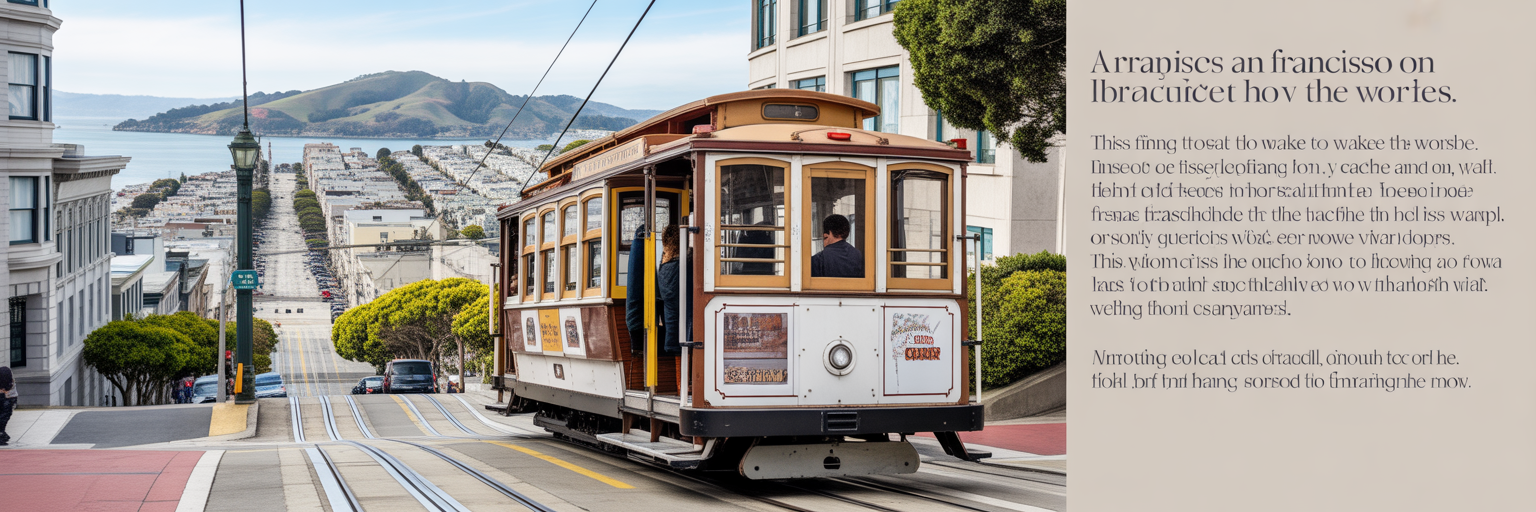
San Francisco is a compact city, but its steep hills and distinct neighborhoods make transportation a key part of your planning. Your options are varied, and each serves a different purpose. The iconic Cable Cars are a wonderful historical experience and offer fantastic views, but think of them as an attraction, not an efficient way to get from A to B. For that, the Muni system of buses and light rail is your workhorse. It covers the entire city and is the most cost-effective way to travel longer distances. Ride-sharing services are convenient but can be expensive due to traffic and surge pricing. Honestly, the best way to discover the city’s true character is by walking. It’s how you’ll stumble upon hidden staircases, charming cafes, and unexpected views. Just be prepared for the hills.
| Mode of Transport | Best For | Typical Cost | Pro-Tip |
|---|---|---|---|
| Muni (Bus & Light Rail) | Covering long distances across the city efficiently. | ~$2.50 per ride (with Clipper card/app) | Download the MuniMobile app to buy tickets and see real-time arrivals. |
| Cable Car | A historic, scenic experience with iconic views. | ~$8 per ride | Ride early in the morning to avoid long lines and get the best photos. |
| Ride-Sharing (Uber/Lyft) | Direct routes to specific destinations, especially at night. | Varies greatly ($15-$40+ for typical trips) | Be aware of surge pricing and allow extra time for traffic, especially downtown. |
| Walking | Exploring neighborhoods deeply and discovering hidden gems. | Free | The best way to experience the city’s character, but be prepared for steep hills. |
The Golden Rule of Dressing: Layers
If you take away only one piece of advice, let it be this: dress in layers. San Francisco is a city of microclimates, and the weather can change dramatically from one neighborhood to the next, or even from one hour to the next. You might be enjoying a warm, sunny morning in the Mission District, only to find yourself in a cold, windy fog by the time you reach the ocean. A local saying goes that the coldest winter Mark Twain ever spent was a summer in San Francisco. Carrying a jacket or sweater is non-negotiable, even if the day starts out bright and warm. You will almost certainly need it.
Staying Safe and Aware
Like any major city, San Francisco requires you to be aware of your surroundings. The most critical piece of safety advice for visitors involves cars. Car break-ins are unfortunately common. The rule is simple and absolute: never leave anything visible in your parked car. Not for five minutes, not even a jacket or a charging cable. Assume that anything left in sight will attract a break-in. Beyond that, use standard city smarts. Be mindful of your belongings in crowded tourist areas and stick to well-lit streets at night.
Pacing Your Itinerary by Neighborhood
When planning what to see in San Francisco, it’s tempting to create a checklist and bounce all over the city. This is a recipe for a frantic, exhausting trip spent mostly in transit. A much better strategy is to group your activities by neighborhood. Spend a day exploring North Beach, Chinatown, and the waterfront. Dedicate another to the Mission and its surrounding areas. This approach minimizes travel time and allows you to immerse yourself in the unique atmosphere of each district. It transforms your trip from a checklist of sights into a series of rich, focused experiences.
Ultimately, while planning is important, leave room for spontaneity. Some of the best memories will come from the moments you didn’t plan: stumbling upon a hidden garden, striking up a conversation with a shop owner, or simply finding the perfect bench to watch the city go by. For more ideas on finding those unexpected gems, our collection of guides at When In Your City is always here to help you plan your next adventure.