The Foundation of a Smooth Group Journey
Mark Twain famously observed that travel is fatal to prejudice, but he also noted, “I have found out that there ain’t no surer way to find out whether you like people or hate them than to travel with them.” This rings especially true for group travel. While these journeys create some of our most profound memories, they also introduce a unique set of challenges. Suddenly, you are managing different budgets, competing interests, and varying energy levels. One person wants to wake up at dawn for a hike, while another needs a slow morning with coffee.
This guide is not just another packing list. Think of it as a strategic framework for proactive harmony. The “essentials” we will cover are tools and strategies designed to mitigate the common friction points that can turn a dream vacation into a test of patience. As the planner, you have likely already put in hours of work. This guide is here to support those efforts, ensuring everyone, including you, has a successful and enjoyable trip.
Understanding how to plan a group vacation is about anticipating needs before they become problems. The following points offer a holistic approach, covering everything from technology and finance to personal comfort and safety. By addressing these areas upfront, you build a foundation of communication and fairness that allows the fun to take center stage. It is about creating an environment where shared experiences can flourish, free from the small resentments that build up over logistics.
Keeping Everyone Connected with Reliable Power

In our connected world, a dead phone is more than an inconvenience; it is a logistical failure waiting to happen. A single personal power bank is rarely enough for a group. With multiple people relying on their devices for navigation, photography, and staying in touch, battery levels drop surprisingly fast. We can all picture the scenario: a group member’s phone dies, they miss a message about a meeting spot change, and suddenly they are separated from the group in an unfamiliar city. This small issue can quickly escalate into a stressful ordeal.
A smarter approach involves a dedicated power strategy. One option is a central, high-capacity power bank, something in the 20,000mAh range, that acts as a communal charging hub during the day. Alternatively, ensuring each member has their own smaller, portable charger can promote self-sufficiency. For evenings back at the hotel, a multi-port wall charger is non-negotiable. It prevents arguments over the one or two available outlets, allowing everyone to recharge their gear overnight. Look for chargers with USB-C ports for faster charging and consider a power bank with an AC outlet if your group has camera batteries or laptops to power.
Beyond the hardware, establish a simple “charging etiquette.” This could be a rotation system for the communal power bank or designated charging times at the accommodation. A little foresight ensures fairness and prevents the quiet resentment that builds when one person feels they are always waiting for an open port. It is a small detail that maintains group morale.
The Power of a Shared Group Inventory
One of the most common packing mistakes is redundancy. When three people each bring their own large bottle of sunscreen or a bulky hairdryer, luggage weight and space issues quickly multiply. The solution is a shared gear list, a simple strategy that transforms packing from a solitary chore into a collaborative effort. The logic is straightforward: instead of everyone packing for themselves, the group packs for the group. This approach not only lightens the load but also ensures you have useful items you might not have considered individually.
Think beyond the obvious. A shared inventory can include items that become central to the group experience. Consider a universal stain remover pen for accidental spills, a quality portable Bluetooth speaker for setting the mood, a multi-tool for unexpected repairs, or a simple deck of cards for downtime. These items are often overlooked but can be incredibly useful. The key is to create a group travel packing list using a tool like a shared note or spreadsheet. Group members can claim items they are willing to bring, which creates accountability and prevents duplication.
This collaborative approach has a powerful social benefit. The playlist shared on the speaker during a long drive or the card game that breaks out while waiting for a train can become focal points for bonding. These shared items create opportunities for connection and turn logistical planning into an act of teamwork. It is a practical way to start building a sense of unity before the trip even begins.
Synchronizing Your Itinerary with Digital Tools
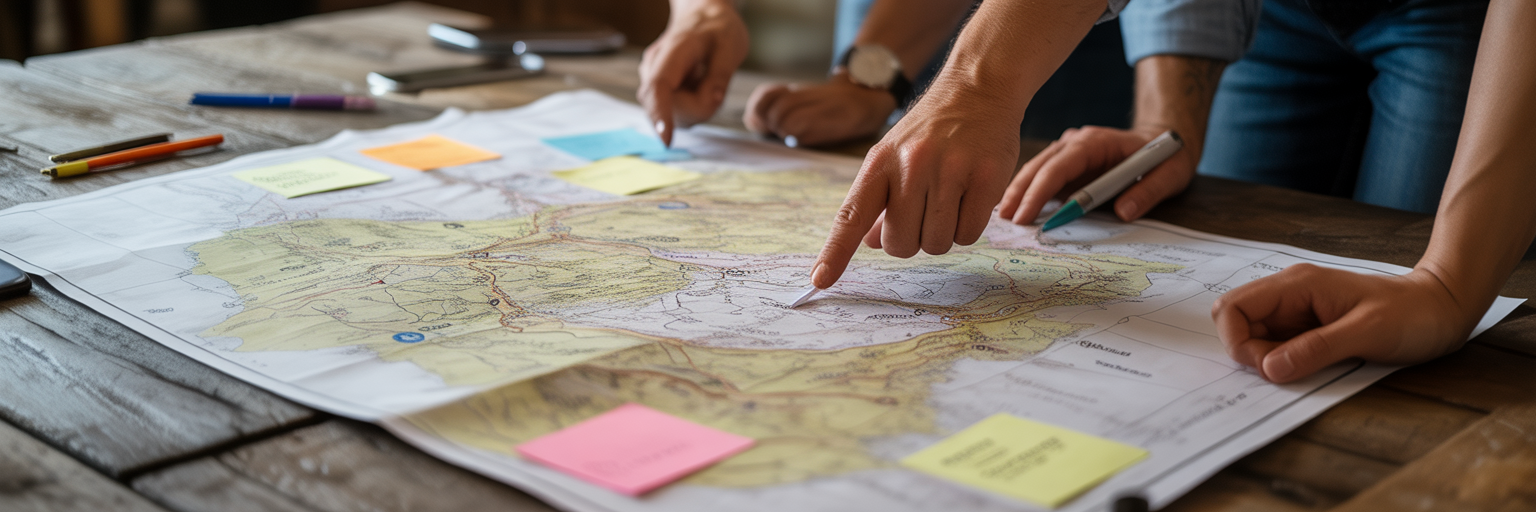
“I thought you said we were meeting at 7:30.” “No, I said 7:00.” This kind of confusion is a classic group travel pitfall. Verbal plans are easily misremembered, leading to frustration and wasted time. The most effective way to prevent this is by creating a single source of truth for the entire trip. A centralized, digital itinerary ensures everyone is on the same page, from flight numbers to dinner reservations.
A variety of group travel coordination tools can help. For simple trips, a shared Google Sheet is perfect for tracking budgets and outlining a basic schedule. For more dynamic planning, a collaborative note app like Notion allows for easy brainstorming and link sharing. For complex, multi-stop journeys, dedicated travel apps like TripIt or Wanderlog are invaluable. They can automatically import booking confirmations and organize them into an interactive timeline with maps. The goal is to choose one tool and commit to it as the central hub for all critical information: addresses, confirmation numbers, and contact details.
This empowers every member of the group to be self-sufficient, reducing the burden on the organizer. Whether you are planning a detailed itinerary to see the historic sites in Bryan, Texas, or coordinating a multi-city European tour, a central plan is vital. As a guide on Thrillist highlights, using shared itineraries is a fundamental step to minimize misunderstandings. Set up the document well in advance and ensure everyone has access and knows how to use it.
| Tool Type | Best For | Pros | Cons |
|---|---|---|---|
| Shared Spreadsheet (e.g., Google Sheets) | Budget-conscious groups and simple itineraries | Free, highly customizable, excellent for budget tracking | Lacks integration, requires manual data entry for all bookings |
| Collaborative Note App (e.g., Google Keep, Notion) | Dynamic planning and brainstorming | Flexible format, easy to share ideas and links, real-time updates | Can become disorganized, not designed specifically for travel timelines |
| Dedicated Travel App (e.g., TripIt, Wanderlog) | Complex, multi-stop trips with many bookings | Automatically imports and organizes bookings, creates maps and timelines | Some advanced features may require a paid subscription, less budget focus |
Simplifying Shared Expenses with Smart Payment Methods
Few things create awkwardness faster than the moment a dinner bill arrives for a large group. Tracking who paid for the shared taxi, who bought the museum tickets, and who owes whom can become a major headache and a source of friction. The key to avoiding this is a clear and transparent system for splitting costs on group travel. A hybrid strategy often works best, combining the convenience of modern technology with the practicality of old-fashioned cash.
While carrying some local currency is essential for small vendors or emergencies, payment-splitting apps are a must for most shared expenses. These tools allow you to create a group, log each expense as it happens, and maintain a running tally of who owes what. This transparency eliminates confusion and the need for complex mental math at the end of the trip. Everyone can see the balance in real-time, and settling up is as simple as a bank transfer.
However, the most important step is to establish financial ground rules before you leave. Have an open conversation and agree on the approach. Key questions to answer include:
- Will one person put most shared expenses on a credit card to collect points and be reimbursed by the group?
- Will the group rotate who pays for meals and activities to keep things relatively even?
- What is the agreed-upon budget for daily meals or optional activities to ensure everyone is comfortable with the spending level?
Deciding this upfront removes ambiguity and ensures everyone feels the process is fair.
Proactive Safety with a Comprehensive First Aid Kit

Packing a first-aid kit is not about expecting the worst; it is about empowering your group to handle minor issues without derailing an entire day. A small cut, a headache, or an unexpected blister should not require a frantic search for a pharmacy in an unfamiliar location. A group first-aid kit is different from a personal one. It needs to be more comprehensive and stocked in larger quantities to serve multiple people over the course of a trip.
Your group kit should be a mobile medicine cabinet. Be sure to include:
- Bandages in multiple sizes and shapes, plus sterile gauze pads.
- Antiseptic wipes and hand sanitizer for clean wound care.
- Pain relievers like ibuprofen and paracetamol.
- Allergy medication, such as antihistamines for unexpected reactions.
- Blister treatment, specifically moleskin or hydrocolloid bandages, which are far more effective than regular plasters.
- Motion sickness medication for boat trips, winding roads, or flights.
- Indigestion remedies for unfamiliar foods.
Crucially, customize the kit for your destination and activities. A beach trip requires aloe vera and strong insect repellent, while a hiking trip in the mountains near a city like San Angelo, Texas, would necessitate elastic bandages for sprains. Consider assigning a “health officer” to carry the kit and a digital copy of everyone’s emergency contacts and allergy information.
Securing Your Trip with Accessible Documentation
Relying on a single copy of your passport or a digital-only boarding pass is a high-stakes gamble. A lost phone or a stolen wallet can instantly escalate from an inconvenience to a full-blown crisis, potentially derailing your entire trip. The solution is redundancy. Adopting a “dual-format system” for all essential documents provides a crucial safety net that protects the whole group.
This system is simple: for every important document, have both a physical and a digital copy, stored separately. Start by making physical photocopies of passports, visas, and driver’s licenses. Store these in a different bag from the originals. If one bag is lost or stolen, you still have proof of identity. Simultaneously, create high-quality digital copies. Scan or photograph your documents and save them to a secure cloud service like Google Drive or Dropbox. It is also wise to download these files directly onto your phone for offline access.
Expand this practice beyond just identification. Include your travel insurance policy, hotel and tour confirmation emails, and flight itineraries. Having this information readily available in multiple formats can expedite check-ins, resolve booking disputes, and provide critical information in an emergency. For added security, the trip organizer can create a secure, shared digital folder containing copies of everyone’s passports (with their consent) and all group booking confirmations. This gives every member a backup and allows others to help if someone loses their documents.
Maintaining Morale with Personal Comfort Items

Even on the most exciting trips, group travel involves inevitable downtime and moments of sensory overload. Constant togetherness can be draining, and maintaining group harmony often depends on each individual’s ability to recharge. This is where personal comfort items become essential. They are not frivolous extras; they are tools for managing personal energy, which directly contributes to a positive group dynamic.
When considering what to pack for a trip with friends, think about items that help create a small bubble of personal space. These can be categorized for easy packing:
- For Sleep: A supportive neck pillow, a good eye mask, and effective earplugs are non-negotiable for planes, trains, and noisy accommodations.
- For Entertainment: A book, downloaded podcasts, or a movie on a tablet can provide a much-needed mental escape.
- For Sustenance: A reusable water bottle and a few favorite snacks from home can be a huge comfort during long travel days.
Of all these, noise-canceling headphones are perhaps the most valuable. They are a polite and effective way to signal that you need a moment to decompress without physically separating from the group. When individuals can self-soothe and manage their own energy levels, they are less likely to become irritable or withdrawn. Whether you need to find a moment of quiet on a long bus ride to explore Wichita Falls, Texas, or on a transatlantic flight, these items are invaluable for preserving both your sanity and your friendships.
Dressing Smartly for Unpredictable Conditions
Simply “checking the weather” before a trip is often not enough. Forecasts can be unreliable, and microclimates can lead to dramatic temperature shifts within a single day. A trip that involves moving from a coastal area to a higher elevation, or even just from a sunny street to a heavily air-conditioned museum, requires an adaptable clothing strategy. Overpacking is inefficient, but being caught unprepared in the cold or rain can ruin an experience.
The most effective approach is the layering system. This strategy relies on three core layers that work together to manage moisture and trap heat, allowing you to adapt to changing conditions by adding or removing them as needed.
- Base Layer: A moisture-wicking shirt made of a synthetic fabric or merino wool that pulls sweat away from your skin.
- Mid-Layer: An insulating layer like a fleece jacket or a lightweight down vest that traps body heat.
- Outer Shell: A waterproof and windproof jacket that protects you from the elements.
Footwear is arguably the most critical clothing choice. Uncomfortable shoes can single-handedly ruin a trip. Always choose versatile, well-broken-in shoes appropriate for your primary activities, and consider packing a second, more casual pair for evenings. Finally, coordinate with your group on any specialized gear, like formal wear for a planned dinner or technical clothing for skiing, to ensure no one feels unprepared or left out.
Staying in Touch with Effective Communication Gear
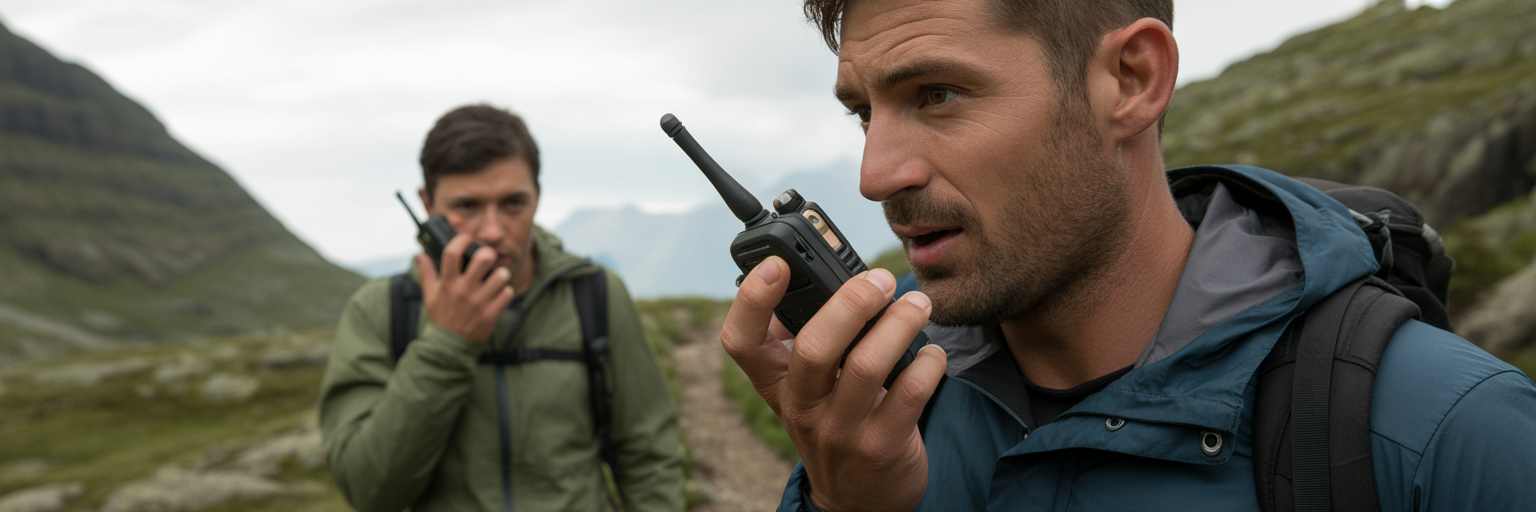
While our smartphones seem to connect us everywhere, there are still many situations where they fail. Poor or nonexistent cell service is common on hiking trails, in national parks, or even in congested urban areas like music festivals. Assuming your group chat will always work is a risky plan. A robust communication strategy requires a backup for when technology lets you down.
For areas with reliable connectivity, a group chat app like WhatsApp is the default. Create the chat before the trip starts to share last-minute details and build excitement. However, for off-grid activities, walkie-talkies are a surprisingly effective and reliable solution. They provide instant, free communication without any reliance on cellular infrastructure. This is a major safety and coordination advantage for activities like skiing, hiking in separate groups, or coordinating between cars in a road trip convoy. This is not about powering your devices, but about the communication devices themselves.
Just as important as the gear are the protocols you establish. Before splitting up, agree on designated check-in times. Most importantly, establish a clear, pre-determined emergency meeting point. This should be an easily identifiable landmark where everyone agrees to go in case of total communication failure. This simple backup plan prevents panic and ensures everyone can regroup safely, no matter what happens.
Responsible Travel with Sustainable Supplies
Being a prepared traveler can and should go hand-in-hand with being a responsible one. Making sustainable choices is not only an ethical consideration but also a practical one. Reusable items are often more durable, reliable, and cost-effective than their single-use counterparts, making them smart additions to any travel kit.
The most obvious and impactful item is a reusable water bottle. It drastically reduces plastic waste, saves money on buying bottled water, and encourages you to stay hydrated. For destinations where tap water quality is uncertain, a bottle with a built-in filter is an excellent investment. As Condé Nast Traveler points out in their guide to group travel, essentials like reusable water bottles are key for both sustainability and convenience. But you can go further. A reusable coffee cup is perfect for morning cafe runs, a portable cutlery set helps you avoid flimsy plastic forks, and a foldable tote bag is invaluable for trips to the market or for carrying daily essentials.
When an entire group adopts these practices, the positive impact is multiplied. It also sets a respectful tone for your visit, showing consideration for the local environment. This mindful approach demonstrates that you are guests who care about the destination’s longevity, whether you are exploring a pristine national park or a vibrant community like Baytown, Texas. It is a small shift in mindset that makes a big difference.
Transforming Good Plans into Great Memories
In the end, successful group travel is the result of thoughtful preparation. The ten points we have covered are not just a checklist; they form a system designed to promote communication, fairness, and mutual respect. By addressing logistics upfront, you clear the way for what truly matters: the shared experiences. These essentials for group trips are the foundation upon which unforgettable memories are built.
However, there is an unwritten eleventh essential: flexibility. Even with the most meticulous planning, things will go wrong. A train will be late, a restaurant will be closed, it will rain on your beach day. The true measure of a successful trip is not the absence of problems but the group’s ability to adapt with a positive attitude. Laughter is often the best tool for navigating unexpected bumps in the road.
To help maintain this spirit, consider implementing brief, daily check-ins. A quick chat over breakfast about the day’s plan can help manage expectations and address any small concerns before they grow. This upfront effort is a small investment that pays huge dividends, transforming a well-planned trip into a seamless, fun, and truly memorable adventure. For those looking to plan their next journey, exploring different city guides can be a great source of inspiration.